
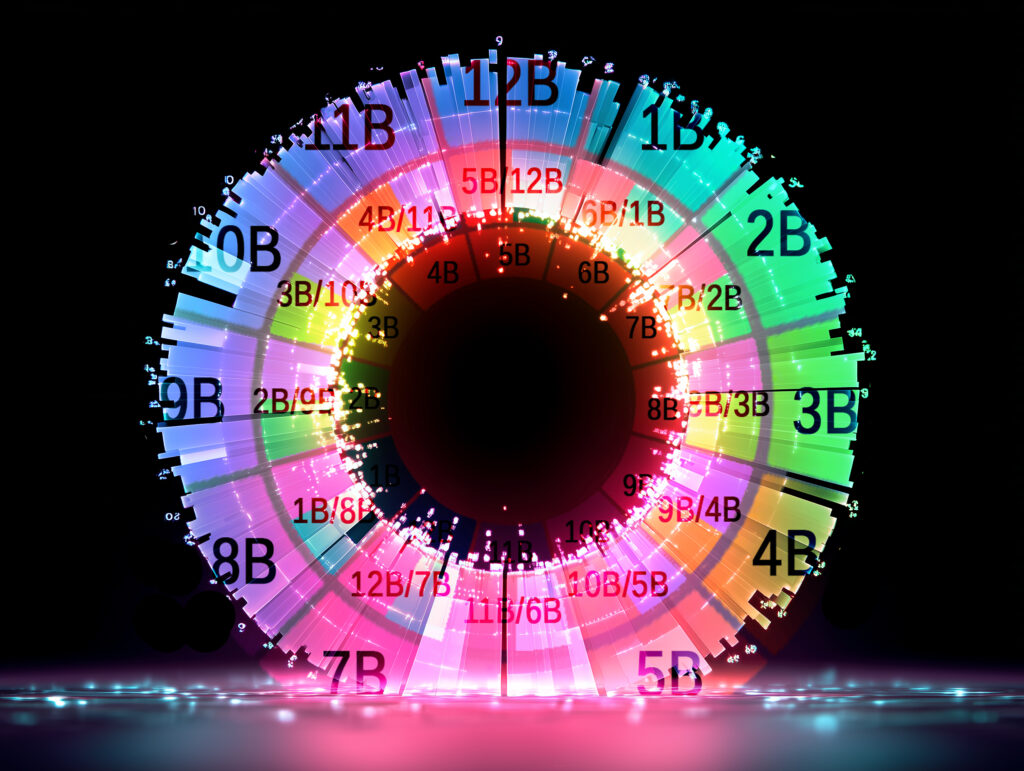
How it works

🧩 1. Understand harmonic mixing — differently


Traditional harmonic mixing relies on the Camelot wheel, which maps tracks to 24 keys (12 major + 12 minor).
But this method assumes that all tracks are played at their original BPM — which is never the case for DJs.
Once you change tempo, the tonality shifts… and suddenly, what used to sound “in key” doesn’t anymore.

⚙️ 2. Universal Key defines a tonality independent from BPM

Unlike traditional key detection that ties a track’s tonality to its original tempo, Universal Key calculates a true, detached note — one that stays valid no matter how fast or slow you play the track.
This new reference is then applied to your music using a modified Camelot wheel, redesigned for precision and realism.
The result is a key system that reflects how your track actually feels, not just how it was recorded.

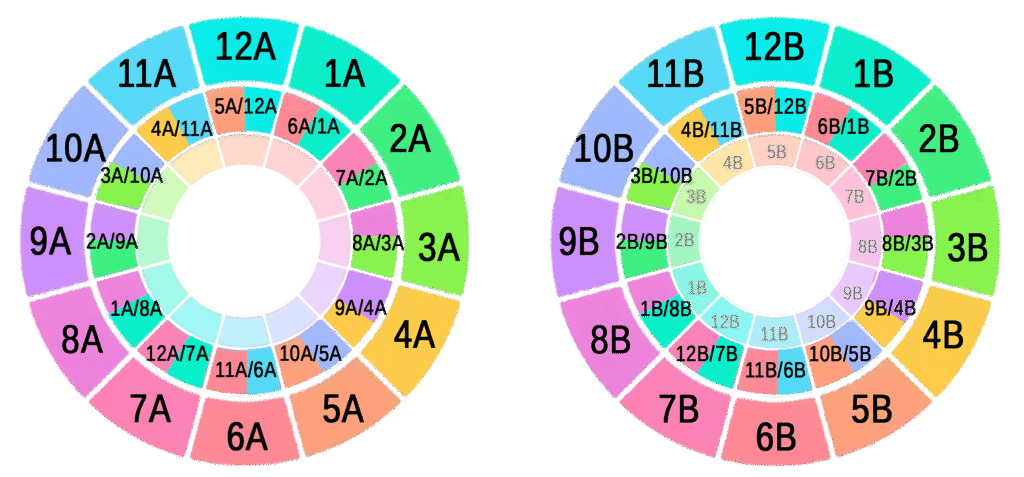
🎼 3. 48 notes instead of 24 — for fine-tuned precision

Instead of the 24 coarse steps of the Camelot system, Universal Key divides the musical wheel into 48 sub-keys.
This adds half-tone and quarter-tone precision — each note can move slightly sharp or flat depending on tempo.
This micro-tuning layer reveals combinations impossible to detect with standard harmonic mixing tools

🔮 4. The result — seamless energy and unexpected blends

Whether you mix techno, hardcore or drum’n’bass, Universal Key lets you connect tracks from different genres and speeds while staying perfectly in tune.
You’ll hear transitions become natural, powerful, and musical — as if the tracks were written to coexist.
Once you try it, your library starts to feel alive — and mixing becomes pure intuition.

Retour en haut